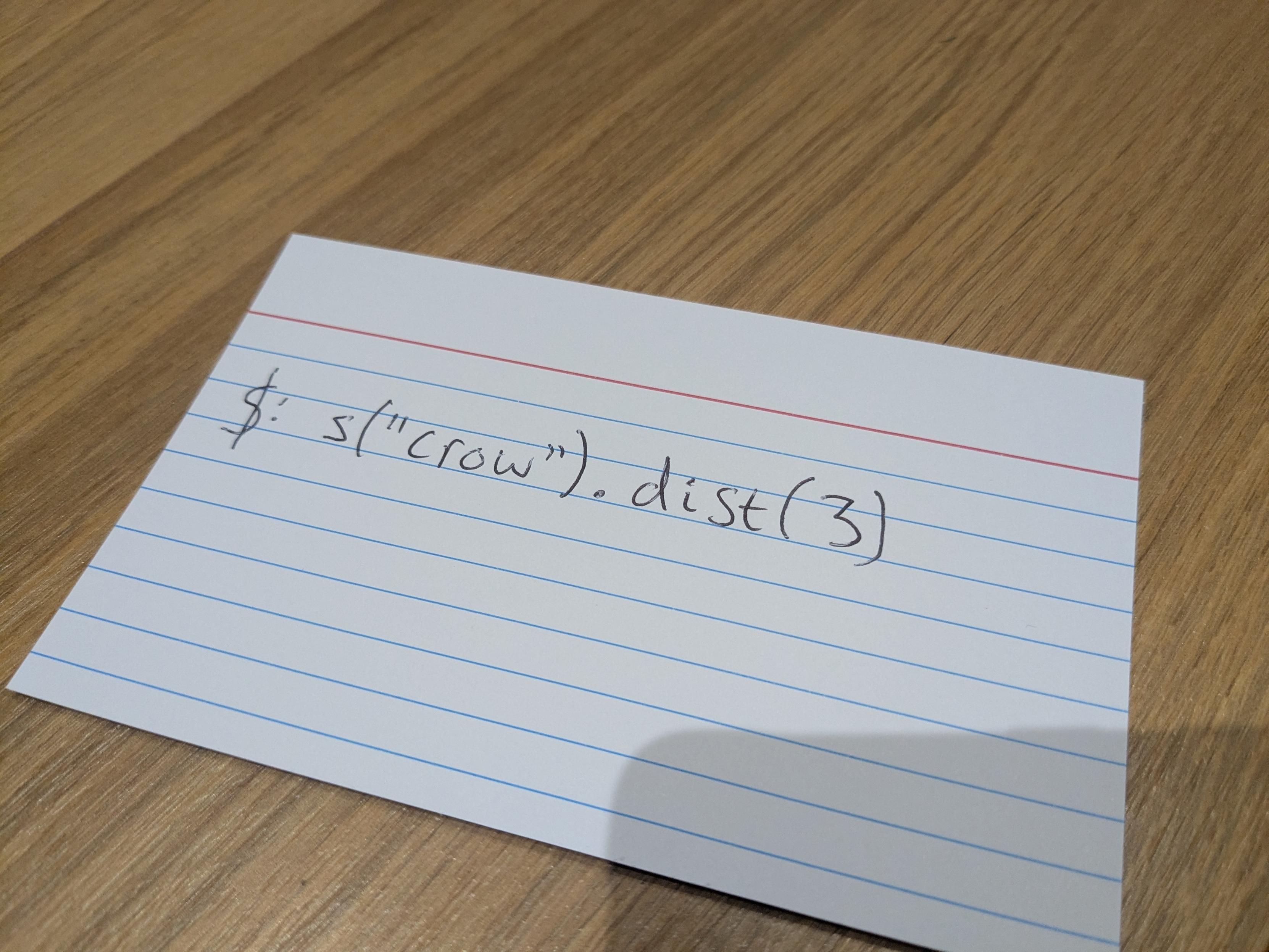
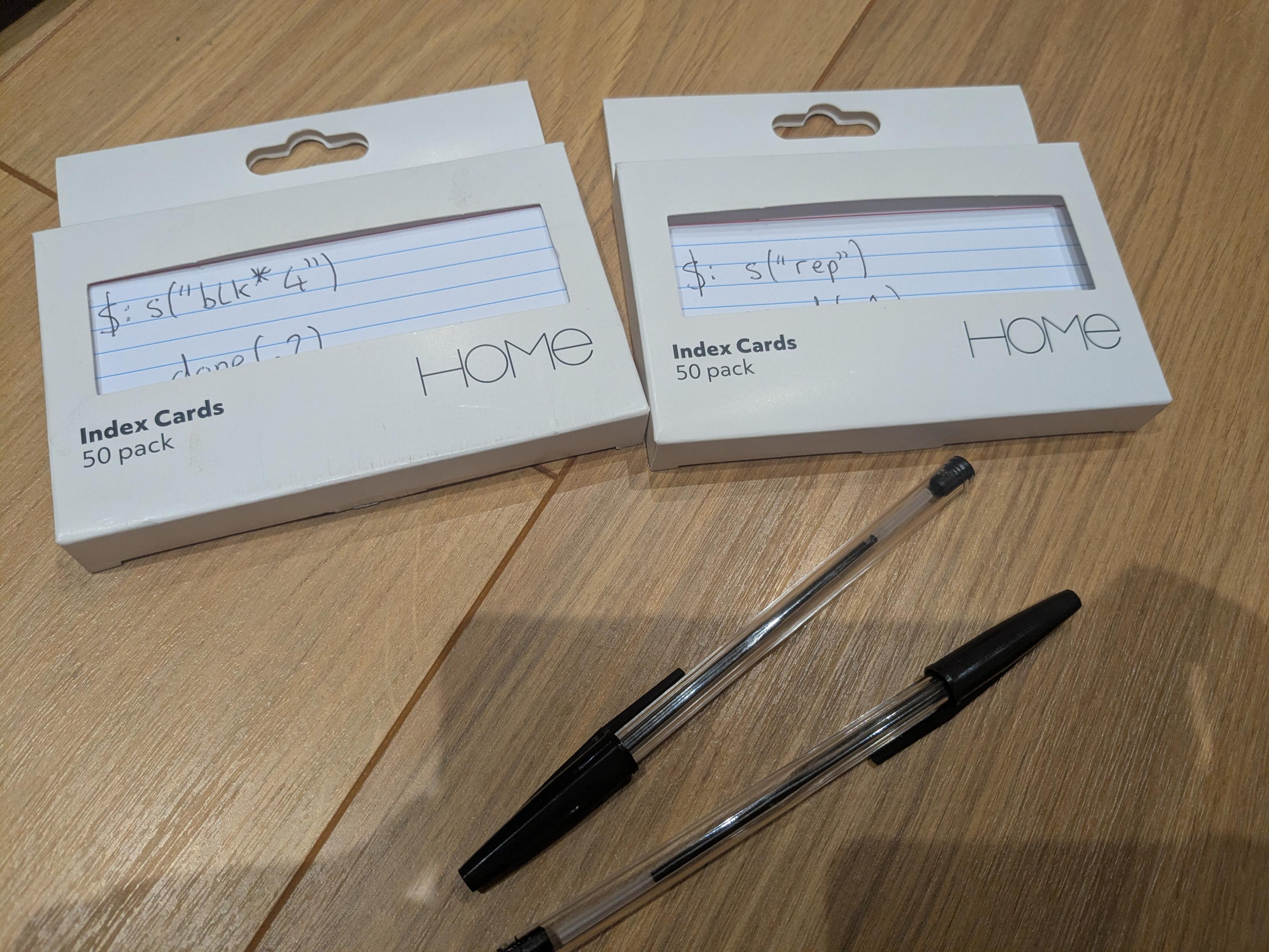
for those who don’t know, this is a new approach to running a pastagang + strudel workshop called “snipplets”. it’s been used in a couple of workshops now. it was developed by pastagang for their workshop at AMRO festival in Linz
https://radical-openness.org/en/programm/2026/jamming-and-pastagang
it contrasts greatly with “normal” strudel workshops. normal strudel workshops teach you strudel by going through strudels mechanics one by one in a classic lesson style, often with lots of examples to try out. eg: “this example demonstrates the X feature…”
pastagang’s snipplets approach is similar but different. attendees are given a huge pack of cards known as “snipplets”. they have hand written code on them. there is no explanation of what they do. attendees are invited to copy them out by hand to try to figure out what they do. there’s a lot more problem solving / reverse engineering / archaeology required than a “normal” workshop where you’re [just] told what they do.
the other important aspect in the workshop is that people start by doing this single player. after a while, people pair up with someone next to them and join a shared room together and write code together. then two pairs join up to form a bigger group… then two fours join up… and the group keeps doubling in size until we have the whole workshop jamming together in chaos / madness. this gradual introduction of collaboration gets people talking to each other. they share their favourite snipplets with each other. they work together to try to figure out what pieces of code do. they feel the sliding scale of what it means to introduce more people into a jam. they feel what it means to have “too many heads” steering one jam: the fun / chaos / trouble of that. the idea is that this all introduces people to what it’s like to jam as pastagang, and what it’s like to learn from the people around you, not the person at the front of the room: how to become resourceful together rather than being reliant on a source of truth.
and that’s just the first half of the workshop! if there’s time, there’s a whole second section about how it feels to collaborate en masse with no leader and no rules (both the good and the bad feelings), as well as mantras and their purpose, and jamming + algoravioli!!
oh and i also forgot there’s a section at the very start of the workshop all about ribbons
I’m really pleased that we, as pastagang, devised this workshop style. it was really really fun when we did it in Linz and people seemed to have a good time: people seemed to enjoy it and stayed doing it much longer after the workshop officially ended (i have a whole supercut of it that I’m working on). it’s [just] really nice watching people talk to each and teach each other, and teach me(!) during a workshop
another dynamic i’d add is that the snipplets are hand-written which is kinda unhinged. it takes a long time to write them out, it’s kinda mad to hand-write code. it means there’s no possible way of copy-pasting them into the computer, which pastagang is very much against. automation is impossible: you have to do it manually. there’s value in typing / repeating things out by hand, one character at a time. it’s very anti-automation in that sense. but it’s pro-automation in the sense that the snipplets are already written for you. you’re expected to write them out as written: as somebody else has already done for you: the process of deciding what to write as a starting point has already been done: it’s outside your control: it’s been automated out: another human has done the live coding for you.
it also means there’s a real sense of care involved. the mundane act of writing them all out is slow and long and mind-numbing. the bad handwriting you see on the cards is an indication of the large human effort behind them: the bad handwriting makes it feel very human. the bad handwriting also means the whole thing is very prone to mistakes. maybe you can’t read it properly, maybe someone made a mistake while writing it down or writing it in, so it forces you to ask other people to take a look and help you fix it: it gets you talking because it’s not your fault that it’s wrong, it’s pastagang’s fault. it’s supposed to be hard and silly so there’s less pressure involved full-stop
it was really cool to see how some of our workshop attendees came to perform with us during our performance in Linz too. we were the closing performance of the entire festival, and i think it’s really cool that some first-timers performed as the final closing act of it all :)
https://radical-openness.org/en/programm/2026/you-must-delete
it was also really cool to see one of our workshop attendees go on to create an online snipplets website that gives you three random snipplets.
https://pastaverse.codeberg.page/snipplets/
i really need to go and add my own and clean up some :) a lot of them were made up on the spot as we wrote them, and that feels like part of the tradition as a workshop runner
i wrote about 60 snipplets last night and my partner, who hasn’t done strudel before, helped to write loads too. it was quite a nice activity to do together for some reason, both last night and in Linz. it got us in the right headspace I think: it got us to slow down and think about what we were doing / what we were gonna ask people to do / what it means to automate / what it means to not / knowing that these snipplets might get broken or lost / but we let code die / we must let go / forget everything we know / and make space / because life is a jam / and we’re in it / so shave your head / it’s pastagang time
back to the wikiblogardenite okay yeah can you stop emailing me that the link to the wikiblogardenite is broken, i know it is, it’s intentional