Arroost is a music making tool that creatively unblocks you by taking away control.
In arroost, certain tasks become impossible, and this emotionally frees you to just make stuff, without wasting energy getting it perfect. Arroost is hard to “steer” and this creates a shift of responsibility away from the music maker (you) over to the music maker (arroost). I wrote about all of this in my essay.
Arroost itself is responsible for whatever’s happening… The sounds playing are because of Arroost — not you.
“It’s not my fault that it sounds bad. It’s Arroost’s fault.”
There was a positive response, and multiple people told me that arroost helped to emotionally unblock them. I spoke about all of this in my talk.
But there was one point of critique that I never managed to address because I didn’t know how.
By taking away control from the “user”, I gain more power myself, as the “author”. Sure, I can say that it’s arroost (not me) that has that power over those who use it, but really it’s me: By deciding what arroost is, I steal agency and power.
In my heart— In my essay, I give my reasons for doing this. It’s to help people! It’s to help myself. I am a user of arroost too, after all.
But I am also benevolent dictator for life! I hold all the power.
In the essay, I give an example of my total power over the project:
When I first added the pitch-shifting feature to Arroost, I received some negative feedback from users. They said it was annoying that they couldn’t move around their sounds without it also changing the pitch. Sometimes, they liked to arrange their canvas in a certain way, and keep it clean and neat, and now they couldn’t do that.
Yes, I received many many requests to remove that feature. But I didn’t listen and in fact I doubled down on it instead.
The pitch-shifting feature was stopping people from obsessing over the cleanliness of their canvas. It was making mess the default state of the tool, which takes the pressure off.
If a user does want to move a sound, they face a difficult choice. Do they really need to move it, and risk ruining its pitch? Or can they leave it be, and carry on creating?
This is a display of arrogance on my part. I’m effectively saying to the user, “I know what’s best for you better than you do.”
“You don’t want this but I know you need it. “
This is a dangerous idea: One I am continually on the receiving end of in other parts of my life. It can be very very harmful indeed. It’s a dangerous idea.
But wait, there’s more!
I also exerted total power over the contributions people gave towards building arroost.
For the first time, I made an active effort to seek contributions from the community. And I am very fortunate that several people did get involved: In testing, fixing bugs, designing things, building features, writing documentation, and so on.
I accepted most of these contributions, and they made arroost much better. For example, jessie added some great visual changes that made it feel far more tangible.
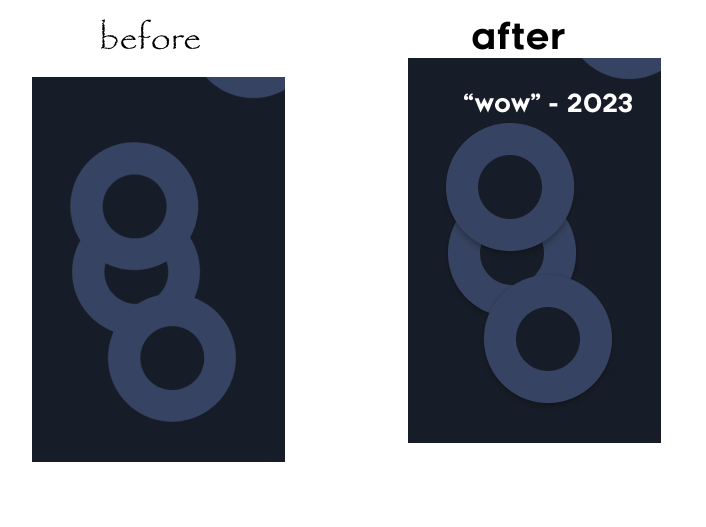
However, I rejected another contribution because it didn’t match the goals that I personally had in mind for arroost. For me, it was really important that arroost didn’t look “good” or “polished”, and for me… these designs were simply too good. There’s nothing wrong with them, and they’re great designs. I really really love them! And if I wanted to turn arroost into a product or a game, I would use them. But they didn’t fit the goals I had in mind at that time of my life.
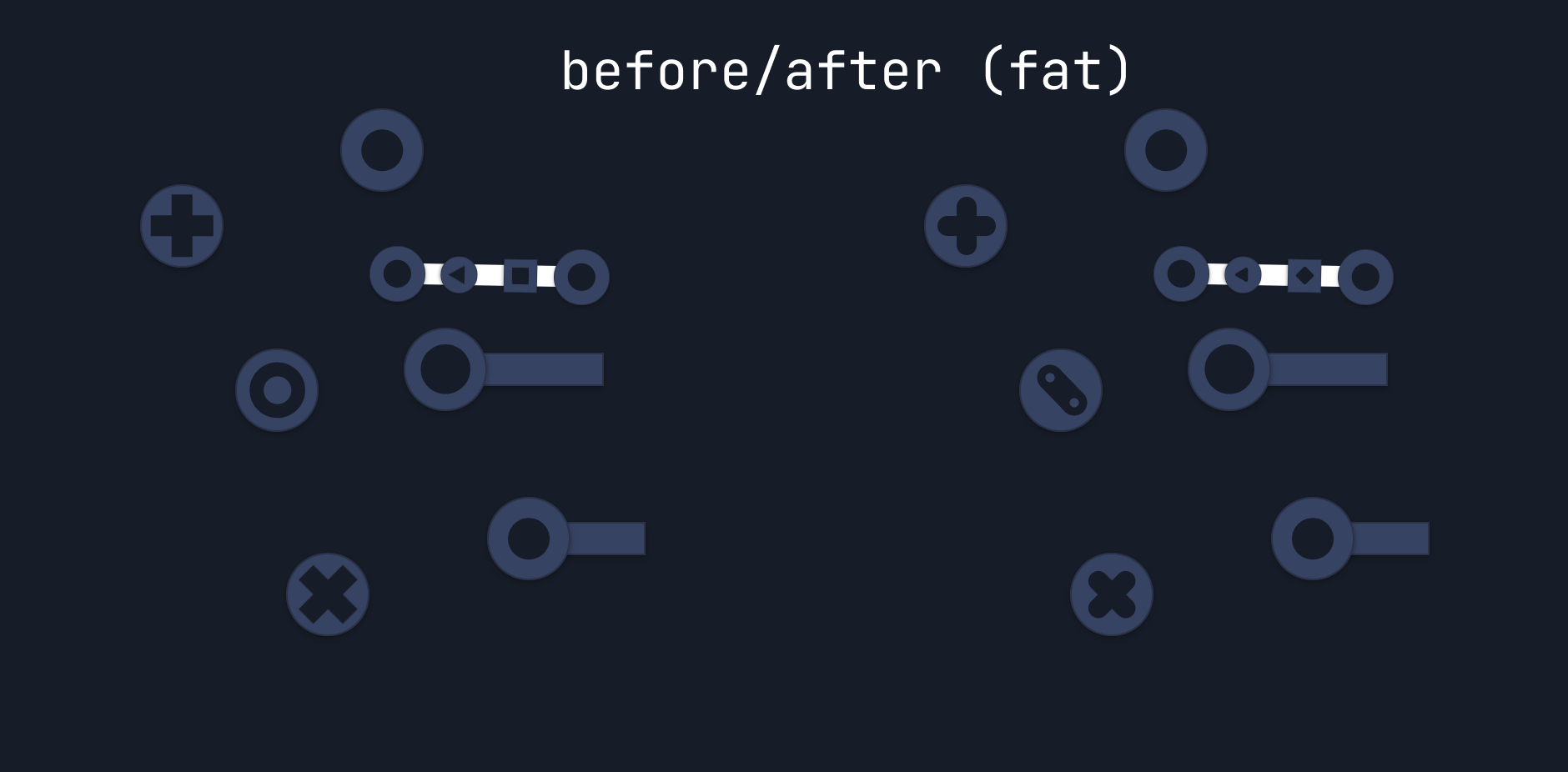
When your contribution gets rejected, it’s not a nice feeling. I don’t think it would encourage you to get more involved.
And it’s unfair. What gives me (some random guy) the luxury of power over something that’s now part of the public space?
This is not the kind of community we should create.
Melanie Hoff occasionally stewards a course at the School For Poetic Computation called Digital Love Languages.
During the course, participants reimagine and explore a better world.
This class is based on the premise that there is a world where all our software is made by people who love us and that we can contribute to building it.
“What if software was made out of love? “
I find— For me— I’ve never taken part in the course. But I’ve— I’ve only followed along from the sidelines, but I— Even the basic premise of the course is highly provocative / thought provoking.
It is a judgement on our existing software: That it is not made out of love. And it gets us to figure out—
When people do things for me out of love— I think of close friends and family members stepping up in an unconditional way.
When people who love me do things for me— When I think of love—
When someone loves me, they often do things I don’t ask for. They surprise me with nice things! They do it without me even saying anything.
And they also do things I specifically don’t— ask them not to do.
Love can mean being honest with me and telling me what I need to hear even if I don’t want to hear it. Love can mean having the courage to tell me the truth, and—
This is really hard to write about. Let’s try again.
When you love someone, you don’t always give them exactly what they ask for. That isn’t love: That’s obedience!
Acting out of love means acting with care and thoughtfulness— having the thought and care to behave compassionately though my writing is starting to get a little bit too—
Giving people exactly what they want is how we ended up with tiktok feeds and everyone being addicted to social media.
We are animals! Our minds and bodies are not yet evolved for the information age. Our fleshy prisons have not yet learned to ignore a dopamine signal if it comes from a scrollable page.
Yes, if you really love someone, you don’t give them the dopamine fix their body wants but shouldn’t. You give them something that makes a positive impact instead.
I think that should be obvious!
Love is unconditional! It’s not a trade or a transaction. You do it because you care, not because you want something in return.
Because of this, love puts you in a vulnerable position. Because… When you act out of love, there’s a chance that you’ll be ignored or rejected.
And for me, this is the big glaring issue with power in arroost, and it’s something that is prominent within Melanie’s course: Consent.
I imposed my views of what I thought would be beneficial… onto others.
Listen, I thought I was right: I thought it was a “helpful” thing to do! But I didn’t ask people if they wanted me to make those decisions or changes: I just did them.
It would be so much more empowering if I let you choose: Choose which features you wanted and which ones you didn’t. Because then… if you do decide to use arroost as I offer it, and it works out… Then it’s even more clearly your success, instead of mine— me stealing your credit.
I shouldn’t get to claim victory when you do well with arroost. That belongs to you! Not to me or to arroost but to you.
Too many of our tools (including mine) claim to empower people but instead impose their own constricted world view.
As developers, researchers, whatevers, this is all we seem to do. Software is repeatedly a controlling and limiting and manipulating force.
This is what I think:
A good tool should empower users. It should not come as a “prescription”, but as an “offering”.
I don’t want to be yet-another-tech-bro. I’m not here to tell you how to live your life but that is what I am doing more and more and more… and it’s bad.
After my opening keynote at Heart of Clojure, I experienced three days of people telling me, “I’m gonna do what you said” and I was repeatedly like “No no no only if you want to! You don’t have to do what I tell you” and for the first time in my life, I was a bit scared by people obeying me.
So when I sat down with people on the final day of the conference, they seemed slightly surprised by my frustration and/or disappointment with myself.
Please, I invite you to listen to me:
I offer you this idea:
When I say things to you, it’s because I think it’s the right thing to say at that moment in time. That doesn’t mean you have to accept it, or follow it, or even listen. Please, I invite you to judge the code I transmit! Do you let it die? or do you let it sit?
It’s a two way street. You’re a player like me. What will YOU say???!?!!??!!!?!
back to the wikiblogardenite